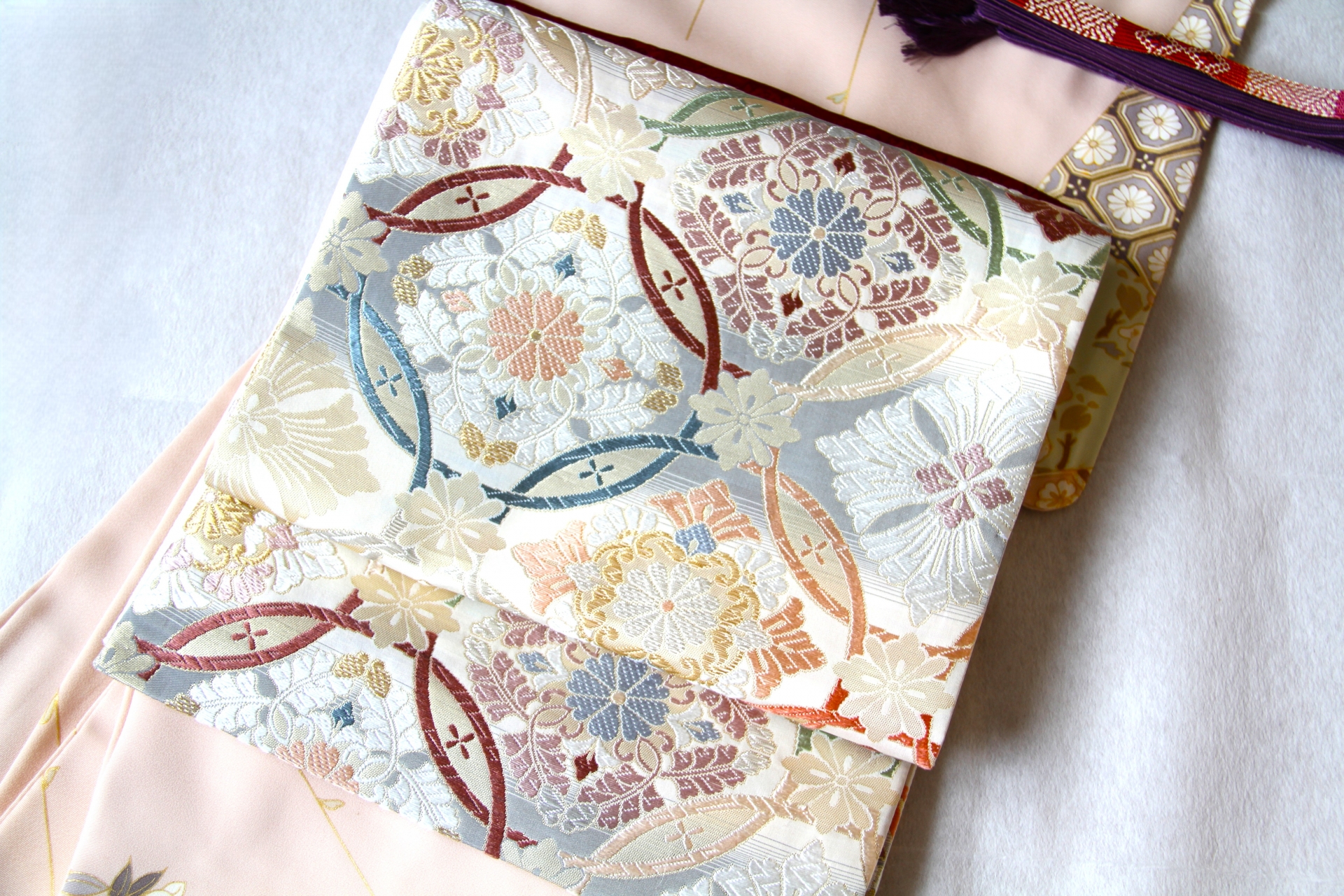
The Nishijin Textile District
Nishijin is not only a place name — it is also the name of a weaving tradition, and you can still feel traces of it in the streets around the hostel. The neighborhood takes its character from that history: the shape of the machiya houses, the occasional sound of a loom through a wall, the particular quiet of streets organized around a craft rather than commerce.
A very short history (without being a history lecture)
Nishijin — the name means "western encampment" — developed as Kyoto's center of silk weaving after the city was rebuilt following a period of prolonged civil war in the fifteenth and sixteenth centuries. Weavers who had scattered across the country returned and resettled in this part of the city, bringing their looms with them.
The fabric produced here, known as Nishijin-ori, became synonymous with high-quality brocade used in court dress, temple textiles, and formal kimono. The industry shaped the entire neighborhood — the scale of the machiya houses, the layout of the streets, the mix of workshop space and domestic life all reflect the trade that supported it for generations.
The weaving industry has contracted significantly since its peak. Some workshops have closed, others have adapted. But the neighborhood that formed around the looms is still here, and it is still distinctly itself.
What you can still see and hear today
Walking through Nishijin, you occasionally hear the sound of a loom through a wall or a partly open door. The rhythm of weaving machinery is distinctive — unhurried, repetitive, and strangely satisfying to hear from the street. It is not a sound you encounter in most parts of Kyoto.
The machiya houses themselves tell the story more visibly. The wide lattice frontages, the narrow street-facing profiles, and the deep interior courtyards are specific to the merchant and craftsman buildings of this district. Many remain residential. Some have been converted to small shops or studios. A few have been carefully preserved as examples of what the neighborhood once looked like throughout.
You do not need to plan a visit to see any of this. It is simply there, in the fabric of the streets you walk through to get to the supermarket or the bathhouse.
Staying in a working district
For guests at Expo Hostel and Cottage, Nishijin is not a heritage district to visit — it is the neighborhood you are staying in. The context of the weaving trade is one reason the streets look and feel the way they do: quieter than the tourist center, more residential, with a particular texture that comes from a place having been organized around a specific kind of work for a very long time.
Understanding a little of that history tends to make the ordinary details — the sound of a loom, the shape of a machiya gateway, the narrow width of a lane — more interesting to notice. It turns a walk to the corner store into something slightly more layered.