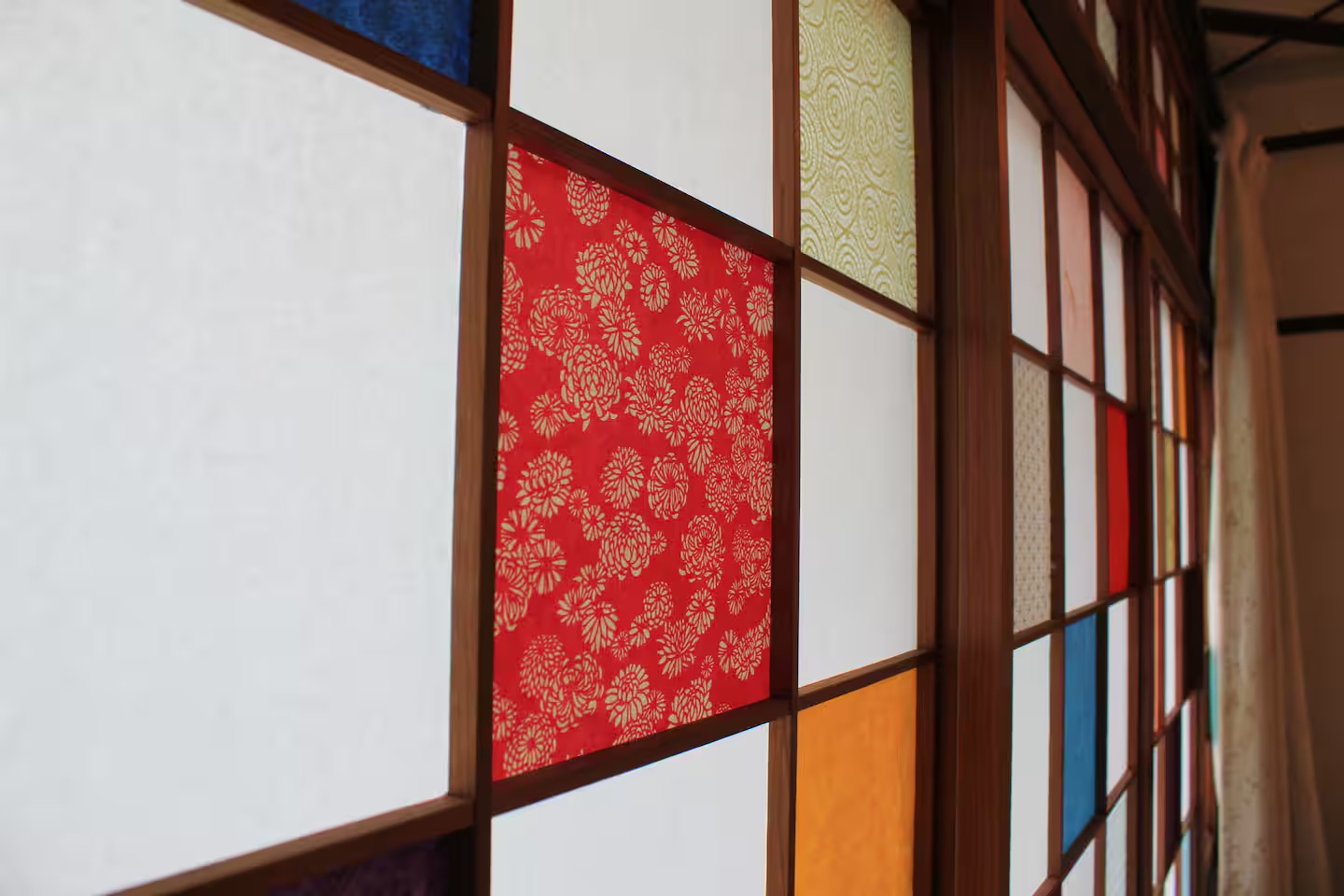
Morning light in a Nishijin lane
Early mornings in Nishijin are unusually quiet for a neighborhood in the middle of Kyoto. The light comes in low along narrow lanes. There's not much happening yet — and that's the point.
Before the day starts
Most of central Kyoto fills up quickly in the morning. Tour groups arrive at temples by nine. Popular streets are busy before most people have had breakfast. Nishijin operates on a different schedule. The textile workshops that still operate here open early, quietly, and without much ceremony. The lanes around the property stay calm well into the morning.
If you go out early — before eight, say — the streets belong to residents going about their routines. An older woman sweeping the path in front of her house. A delivery bicycle. The smell of something baking from a bakery two streets away. These are small things, but they accumulate into a particular kind of morning that's hard to find if you're staying somewhere busier.
The stay that goes beyond the itinerary
There's a particular feeling that comes after the third or fourth day somewhere. The place stops being new and starts being familiar. You know which way to turn out of the front door. You have a preference for which café to go to in the morning. The neighborhood becomes the background of your day rather than the subject of it.
That shift is one of the main reasons people come back, and why guests who stay longer tend to describe the experience differently from those who stay for a night or two. Nishijin is a neighborhood that rewards that kind of attention — it gives you more the longer you look.
Why guests come back
Several guests who have stayed at Expo Hostel & Cottage have returned — sometimes for a second stay, sometimes for longer ones. What most of them mention is the neighborhood, not just the accommodation. They come back for the onsen, for the bakery, for the particular light on particular streets in the morning.
That kind of return is only possible if the stay itself goes beyond a bed and a location. It means the place becomes somewhere worth coming back to — which, in Nishijin, doesn't take very long.